Why a Calm Process Matters When You Forgot ID Badge
When you forgot ID badge access, it can feel awkward—especially if there’s a line behind you or you’re rushing into a meeting. But in a well-run workplace, it’s not a character judgment. It’s an operational moment that needs a calm, consistent response.
A simple routine protects the building and protects people’s dignity at the same time. The goal is straightforward: verify identity, provide appropriate temporary access, and document what happened without blame. When everyone follows the same steps, you avoid front-desk friction, reduce the perception of favoritism, and keep teams moving—whether you’re in an office, school, healthcare facility, warehouse, or event setting.
A predictable response to a forgot ID badge situation is a sign of a mature security culture: verify first, issue temporary access if appropriate, and keep the interaction respectful and routine.
Set Expectations Before It Happens: Clear, Neutral Policy Language
The most drama-free forgot ID badge moments usually start long before anyone reaches the door. When badge expectations are stated clearly—and repeated in a neutral tone—people are less likely to feel singled out when they need help.
Effective policies treat forgotten credentials as a process issue, not a personal failure. They define where badges must be worn (for example: in public areas, in secure zones, or at all times on site), who is covered (employees, contractors, students, volunteers), and what someone should do if their credential is missing.
- Define where and when badges must be displayed (examples: "in common areas" or "inside secure zones")
- State what counts as “forgotten” vs. “lost” (and where to report a possible loss)
- Explain what the first, second, and repeated occurrences look like (so the response is consistent)
- Set boundaries that reduce risk: never share badges, never tailgate, and don’t “wave someone through” without verification
- Use badge policy tips that assume positive intent while still requiring verification
Good badge policy tips are short, neutral, and repeatable. If a policy can’t be used consistently at a busy front desk, it’s too complicated.
Temporary Badge Process: Step-by-Step (Front Desk, Security, or Manager)
A standard temporary badge process removes debate. It gives front-desk staff, security teams, and managers a shared playbook that’s fair to everyone—especially during peak arrival times.
Controlled entry and identity verification are widely recognized parts of physical security practice. Keeping access predictable—and tied to verification—reduces opportunities for unauthorized entry and confusion. For a high-level overview of common physical security principles, see this CISA resource: source.
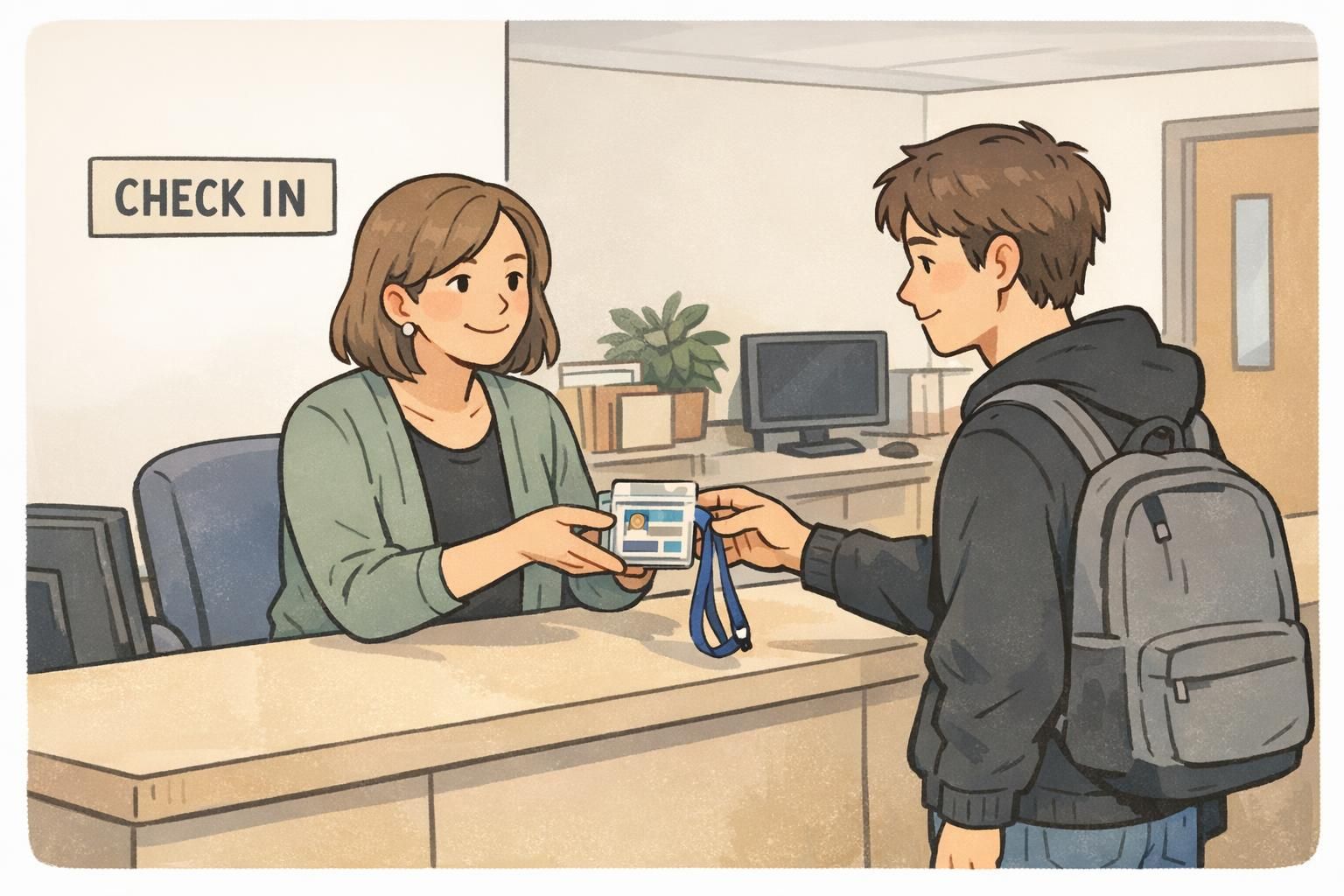
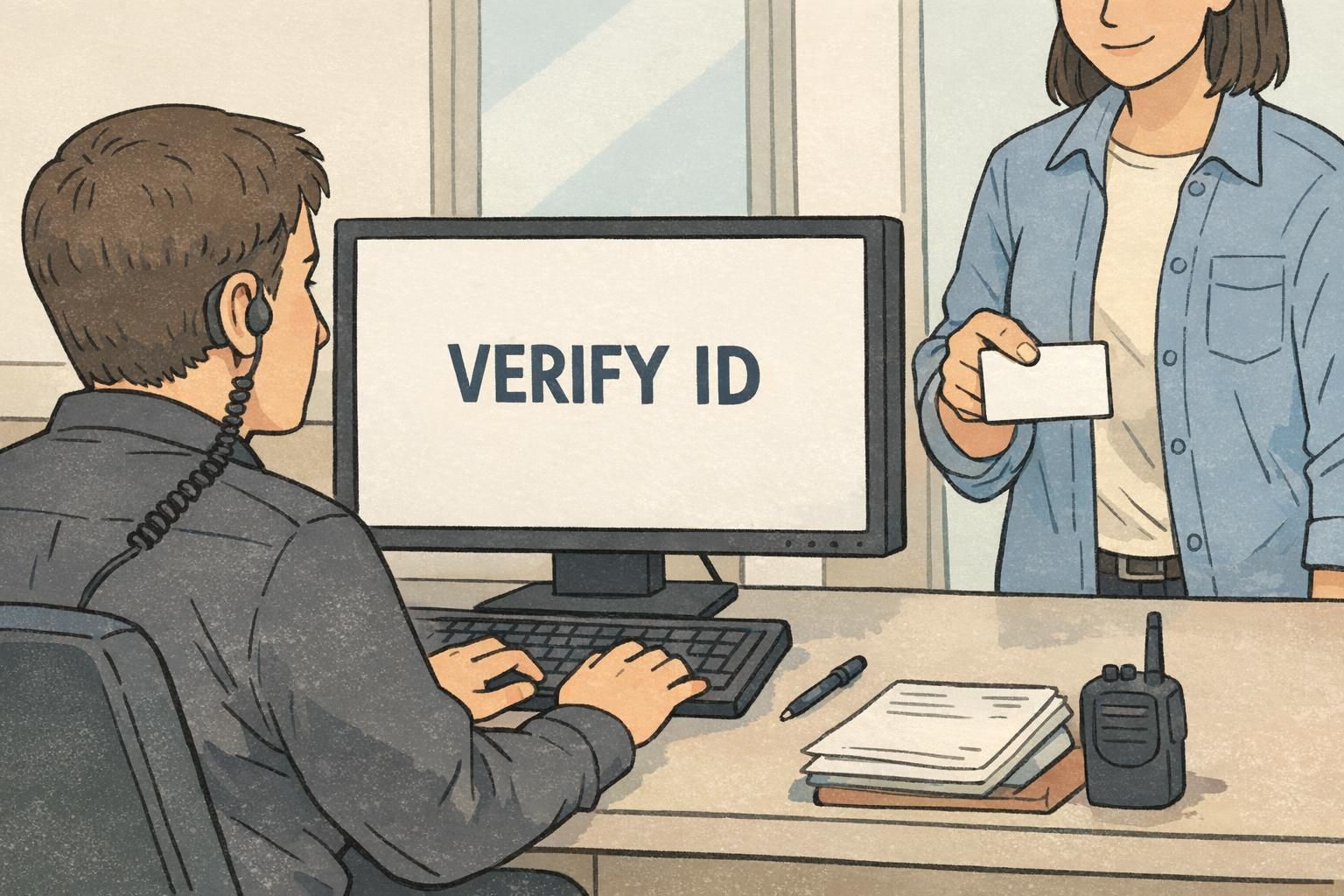
- Step 1: Confirm identity. Use a government photo ID, an employee directory photo, manager confirmation, or a visitor management system—whatever your environment supports.
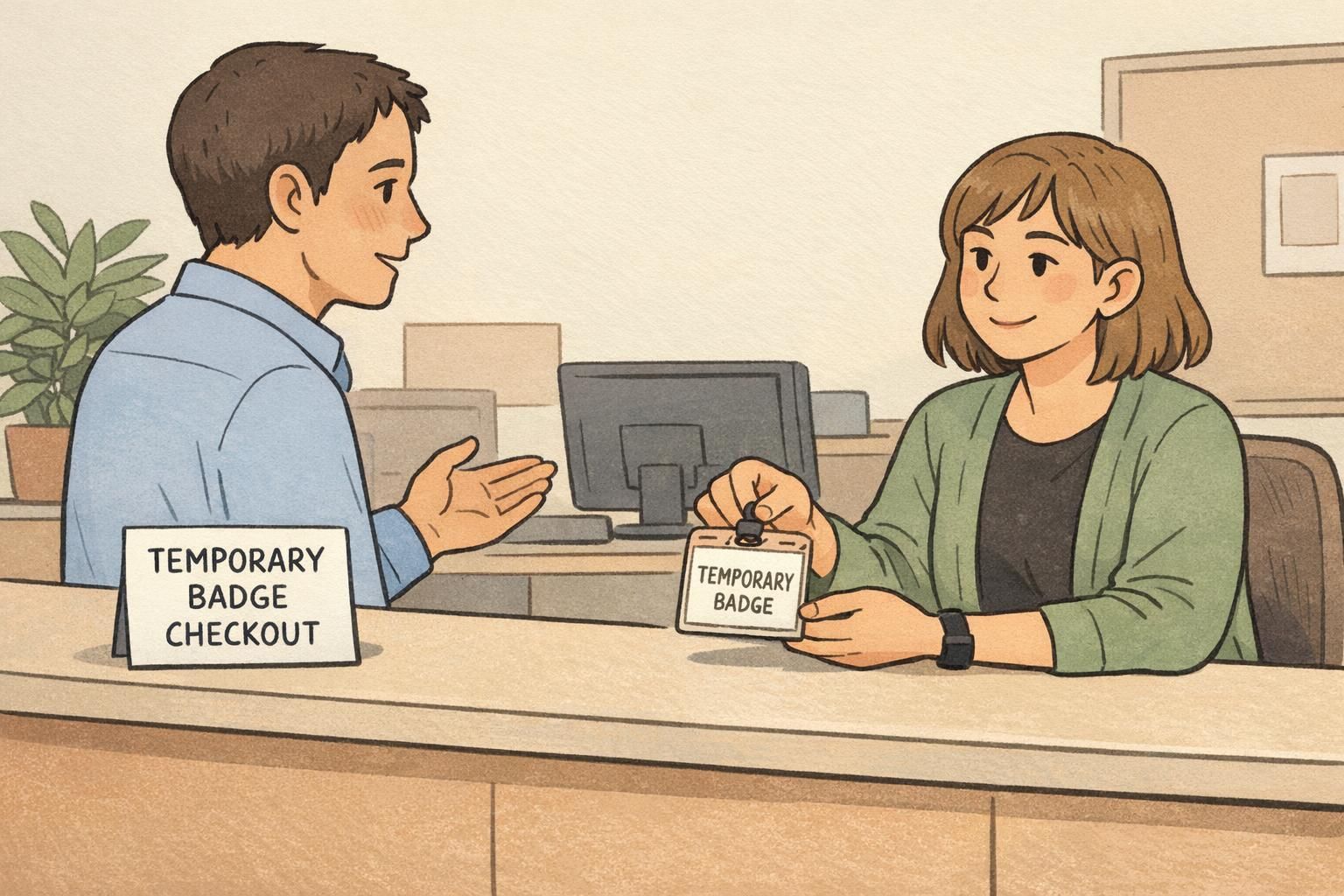
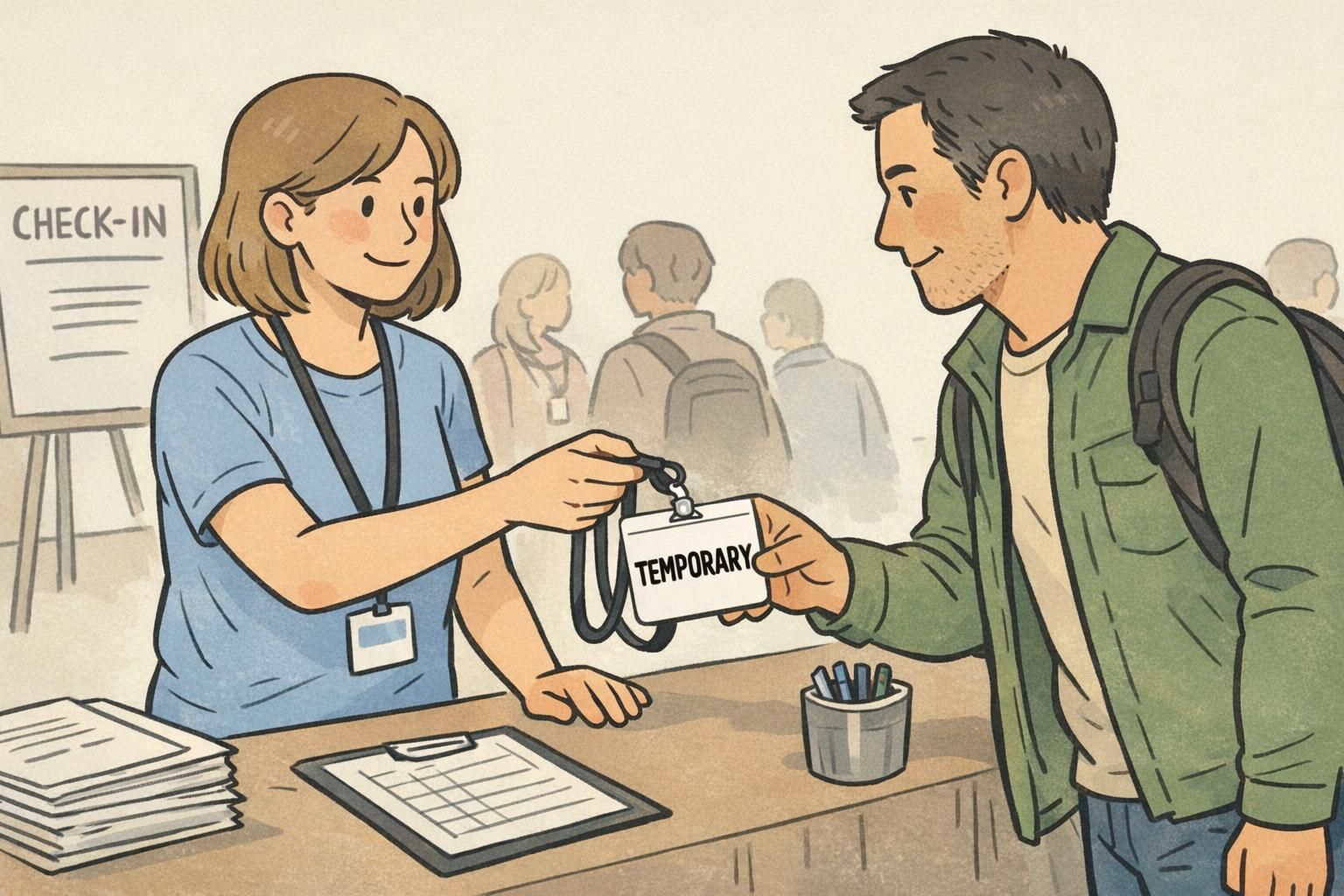
- Step 2: Issue a clearly marked temporary credential. Set an expiration (end of day, end of shift, or event end time).
- Step 3: Record issuance. Log the person’s name, date/time, reason, who issued it, and expected return time.
- Step 4: Collect the temporary badge. Retrieve it at exit or at a defined checkpoint so credentials don’t linger in circulation.
When the temporary badge process is consistent, it becomes routine. People learn what will happen, and staff don’t have to improvise under pressure. That consistency is what keeps the tone calm and the building secure.
What the Temporary Badge Should Look Like (So It’s Not Confusing)
A temporary credential only works if everyone can recognize it quickly. If a temp badge looks too similar to a permanent ID card, it can create confusion for coworkers, supervisors, and security—especially in busy hallways or shift changes.
The simplest rule: make temporary badges visually distinct. A different color, a large “TEMPORARY” label, and a layout that prioritizes the person’s name (and photo if available) helps staff make quick, confident decisions.
- Use a distinct color or background for all temporary credentials
- Add a large, high-contrast “TEMPORARY” label so it can be recognized at a glance
- Keep the layout simple: name first, photo if available, and the date or expiration
- Choose durable materials and a secure attachment method (clip, holder, or lanyard) suited to the environment
- Avoid designs that could be mistaken for a permanent employee badge
Clear visual differentiation reduces misunderstandings and helps prevent tailgating, because staff can quickly see who is on a temporary credential.
Accountability Without Embarrassment: Scripts That Defuse Tension
People tend to mirror the energy of the person helping them. If the interaction feels routine and respectful, most forgot ID badge moments take under a minute and don’t linger emotionally.
Short scripts help staff stay neutral—especially when the lobby is busy or someone arrives stressed. The best language communicates: “This is normal. We have a process. We’ll take care of it.”
- “No problem—let’s get you a temporary badge.”
- “We’ll just verify your ID and log it.”
- “Thanks—this temp pass expires at the end of your shift.”
- “Please return it on the way out so we can close the loop.”
When possible, keep the conversation private. Avoid announcing the issue to nearby coworkers or adding commentary like “again?” If it’s a repeat pattern, the coaching belongs with a manager or HR—not at the front desk where the person is on display.
"When we treat temporary badge checkout like any other check-in task, people stop feeling judged—and our lobby stays calm even on the busiest mornings." – Facilities Coordinator
Handling Repeat Forgot-Badge Situations Fairly (Escalation That Stays Professional)
Repeated forgot ID badge situations can create real security and workload issues. The answer isn’t public scolding—it’s a consistent escalation path that feels fair, applies across seniority, and stays focused on facts.
Define thresholds so staff aren’t left guessing. For example, a friendly reminder for early occurrences, a manager notification after a set number, and replacement fees only if that aligns with your policy. The tone stays professional when the steps are known in advance and applied consistently.
- Occurrence 1: Verify, issue temp credential, quick reminder of expectations
- Occurrence 2: Verify, issue temp credential, note in the log and remind again
- After a set threshold: Manager notification (handled privately), with practical coaching
- If applicable: Replacement process for lost badges (separate from “forgotten” cases)
Keep records factual: dates, times, issued temporary badge number (if used), and return status. Avoid judgmental notes that don’t help security or operations.

Design and Supply Tips: Make Daily Badge Use Easier
A surprising number of forgot ID badge moments are caused by friction, not defiance: uncomfortable clips, flimsy holders, badges that flip around, or designs that aren’t easy to read quickly. When daily badge use is easy, compliance becomes the default.
Small improvements can reduce repeated issues before they start. If people can attach their credential comfortably and it stays visible, they’re less likely to leave it behind or tuck it into a bag where it’s not useful at the door.
- Use reliable badge holders that protect the card and keep it presentable
- Choose comfortable lanyards or secure clips appropriate for the environment (office vs. warehouse vs. school)
- Print names and photos clearly so verification is fast and consistent
- Consider role-based color coding or department identifiers where it truly helps staff make decisions
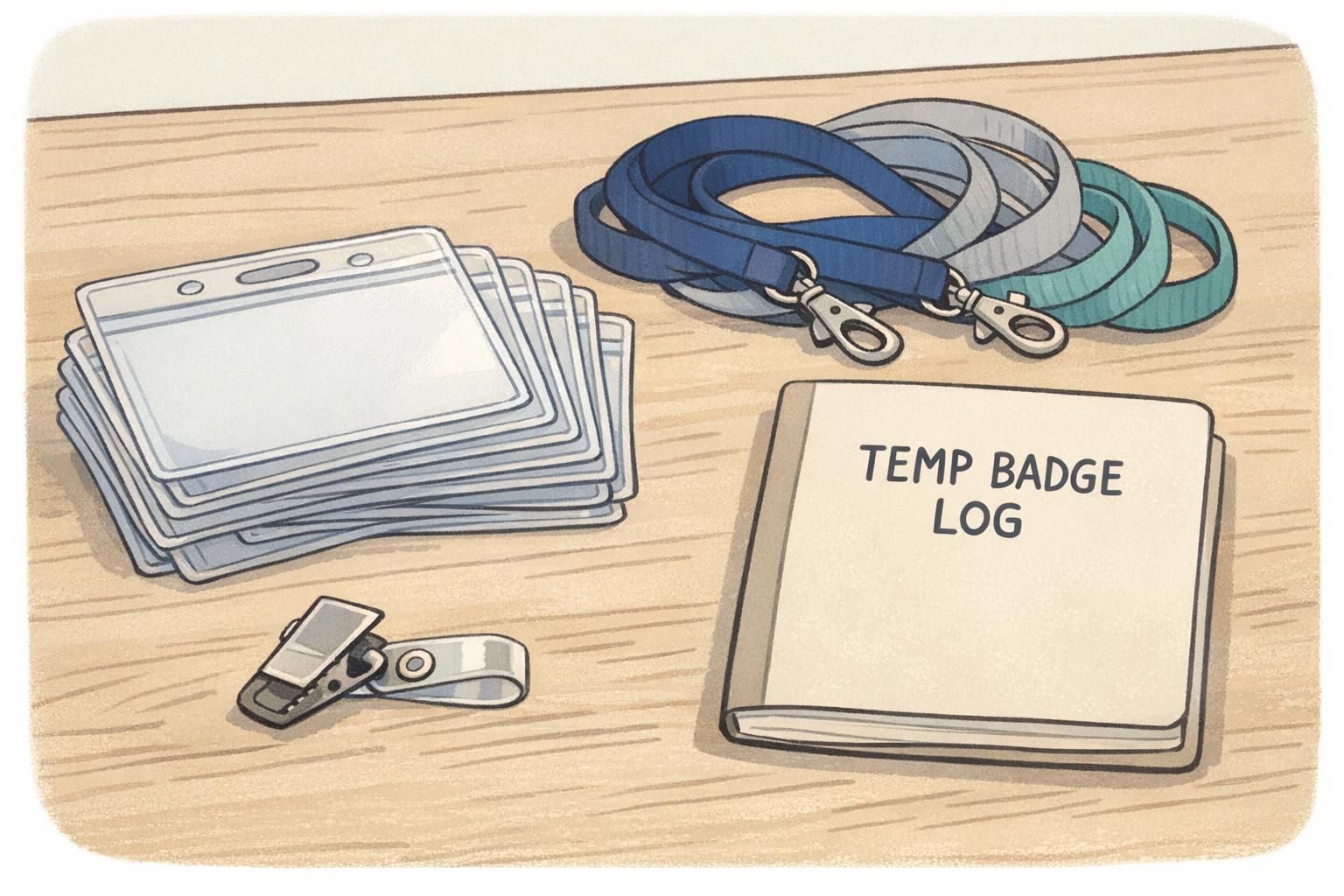
- Keep a small on-site backup supply (holders, clips, lanyards) so temporary credentials don’t become “make-do” paper scraps
BadgeZoo Products That Support a Smooth Temporary Badge Setup
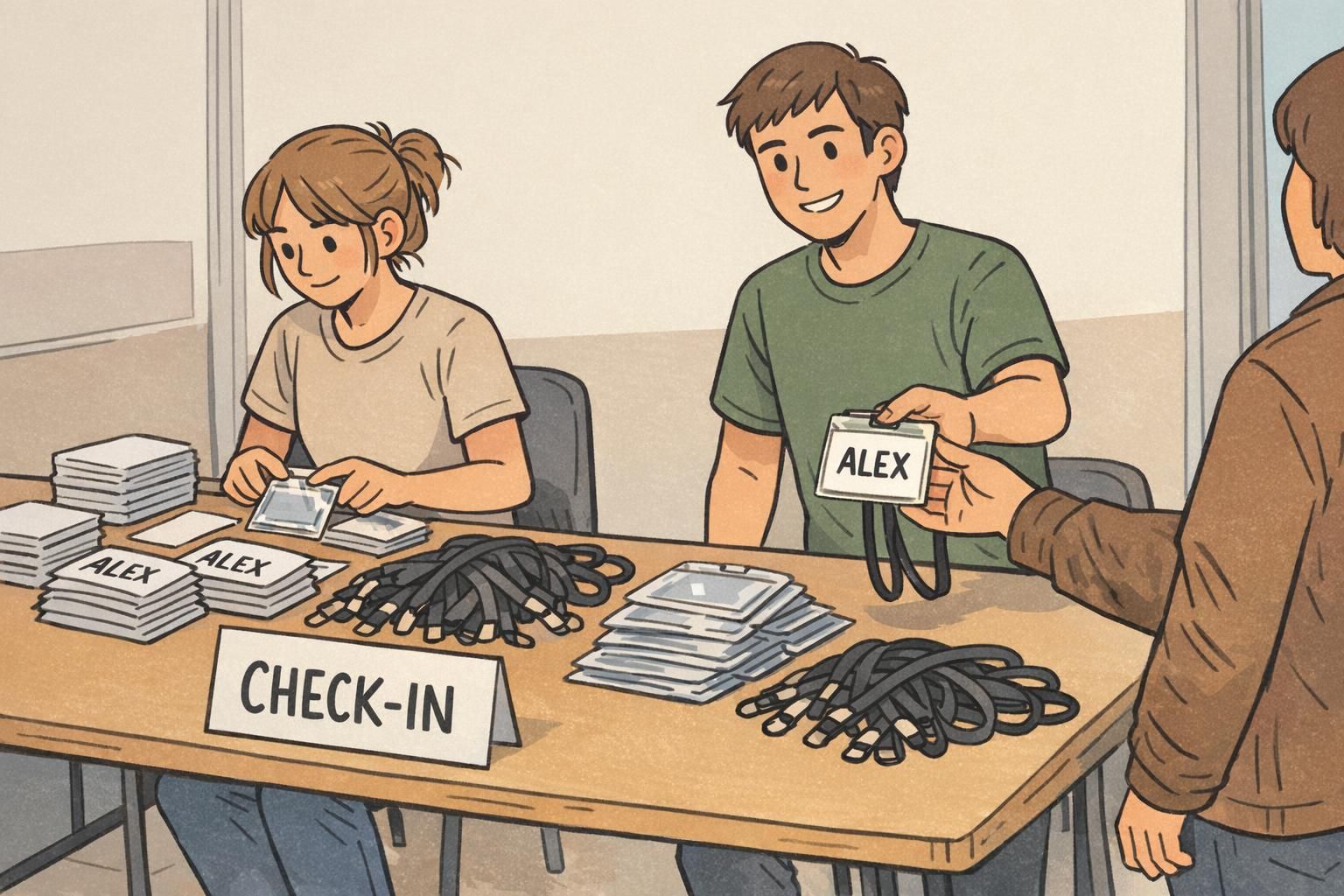
If your team needs a clean system for day passes, replacements, or check-in, BadgeZoo can help with event badges, name tags, and ID badge solutions designed for clear identification. Many organizations find it helpful to set up a dedicated “temporary badge” kit—holders, clips or lanyards, and pre-printed templates—so staff can issue credentials quickly and consistently.
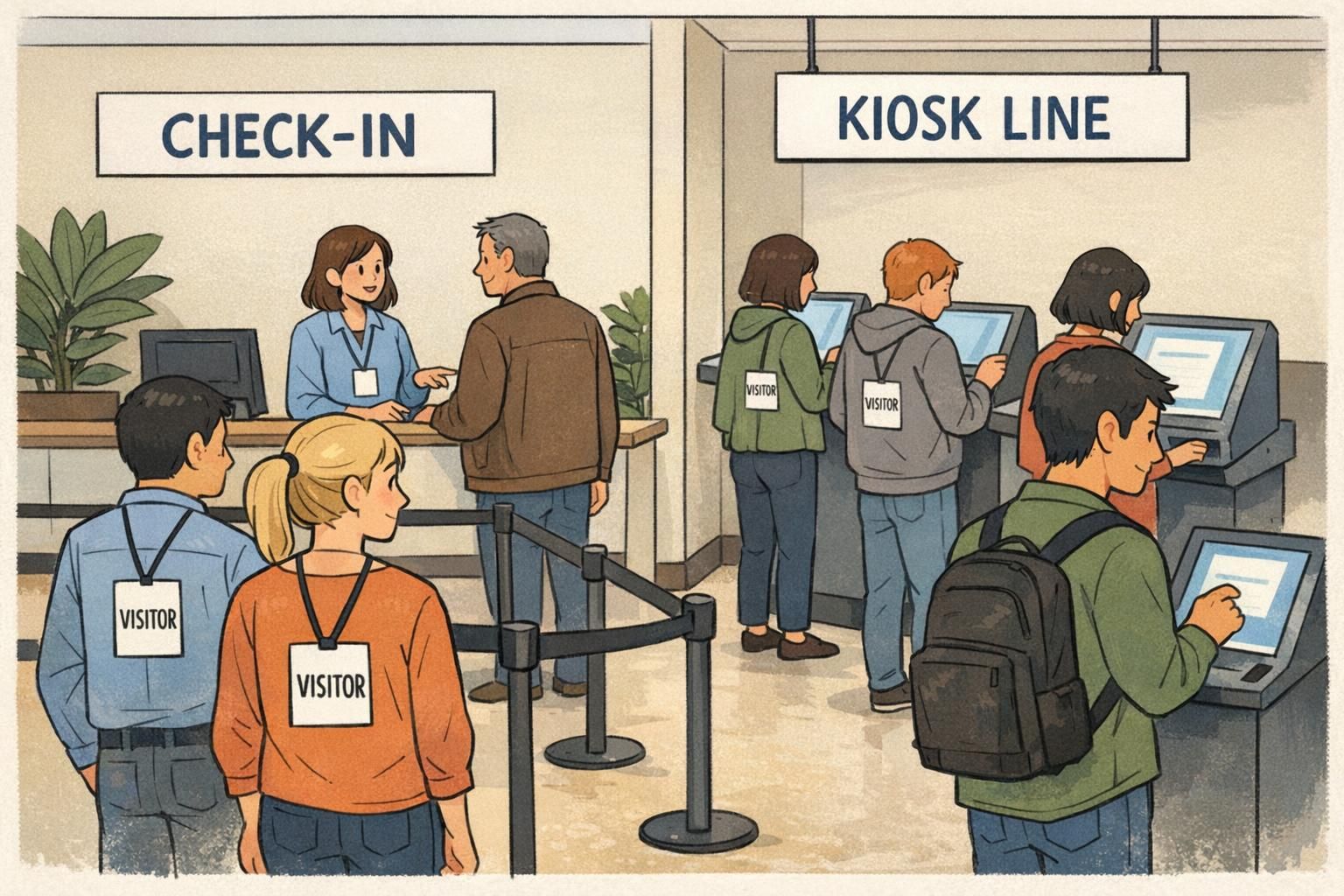
A practical way to reduce confusion is to standardize strong visual differentiation between permanent and temporary credentials (color, label, and layout). If you’re building an event-friendly approach to temporary credentials, you can use custom event badges for temporary credentials as part of a consistent check-in flow.
Operational consistency matters more than complexity: a clearly marked temporary credential plus a simple log can outperform an improvised approach—especially when staff rotate at the desk.
Quick Checklist: A Drama-Free Forgotten Badge Workflow
When the moment happens, staff shouldn’t have to decide what’s “fair” in real time. A checklist makes the response predictable, respectful, and fast. It also reinforces badge policy tips without turning the interaction into a lecture.
- Verify identity (photo ID, directory photo, manager confirmation, or system check)
- Issue a visually distinct temporary credential
- Set an expiration (end of day/shift or event end time)
- Log issuance (name, date/time, reason, issuer, expected return time)
- Collect the temporary badge at exit or a defined checkpoint
- Confirm the person knows where to retrieve their permanent badge—and what to do if it may be lost
- Close with a neutral reminder (for example: “Thanks—please bring your badge tomorrow so check-in is quicker.”)
Keep it routine and consistent: without verification, don’t issue a temporary credential. Offer the standard next step your site uses (for example, contacting a manager for confirmation) and proceed based on your established process.
If it’s easy to do in your environment, a photo can reduce confusion. If it’s not practical, focus on high-visibility “TEMPORARY” labeling, a clear name, and a firm expiration time.
Use neutral language, keep the interaction private when possible, and reserve coaching for the appropriate channel (manager/HR). The front-desk step should feel like a normal operational routine.
The best outcome is boring: quick verification, a clear temporary credential, a clean log entry, and everyone back to their day—no drama, no embarrassment, and no gaps in access control.