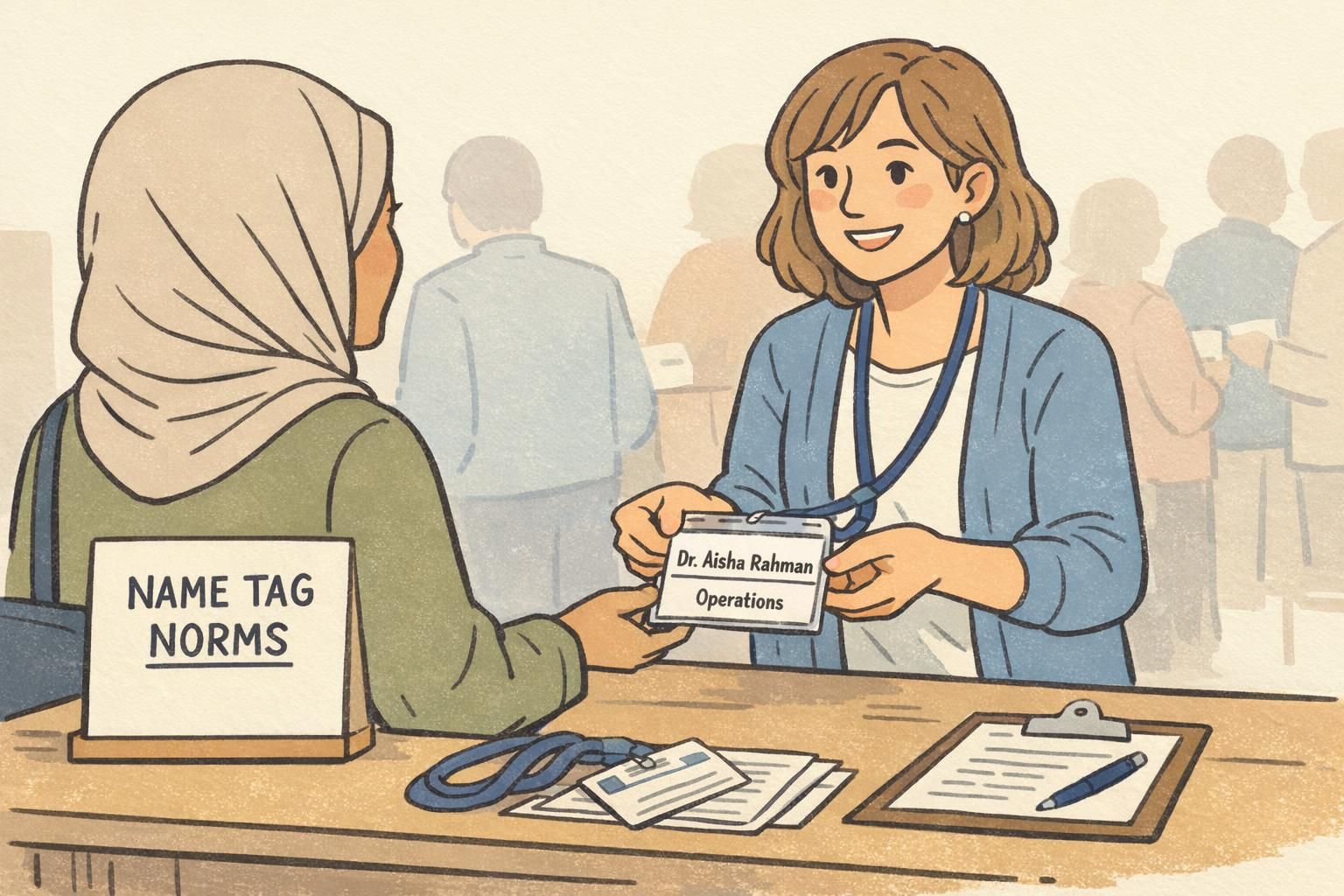
Why name tag norms vary (and why it matters at work and events)
Name tag norms are a small detail with outsized impact—because a badge is often the first “introduction” someone sees in a workplace, clinic, campus, or conference. The way a name is displayed (first name only, first + last, or title + last name) can instantly signal friendliness, hierarchy, distance, or respect.
The challenge is that what feels normal in one environment can feel awkward in another. In some settings, first-name-only badges create quick rapport and reduce barriers. In others—especially formal or client-facing contexts—skipping titles and family names can come across as overly familiar, or as if status and role are being ignored. When people come from different cultural backgrounds, those interpretations can collide.
When name tag norms are aligned with the setting and the wearer’s preferences, introductions get easier: fewer awkward corrections, less guesswork, and more respectful interactions from the start.
- Context drives expectations: a startup meetup often reads “first name” as approachable, while a clinic may read it as too informal.
- Power dynamics matter: customers/clients, students, patients, and new hires may prefer clearer formality cues at first contact.
- Name structure varies globally: surname-first order, multiple family names, patronymics, and diacritics can affect what looks “correct.”
- Badges do real work: they reduce friction by helping people address each other confidently and consistently.

A respectful default: start formal, then follow the person’s preference
When you’re unsure what someone prefers—especially in a cross-cultural setting—a widely respectful baseline is to start with Title + Last Name, then quickly adjust to the person’s preference. This approach is simple, practical, and tends to reduce the chance of sounding too familiar too soon.
In many professional interactions, people experience more formal address as more respectful at the beginning of a relationship, particularly when roles, authority, or service relationships are involved. That’s why organizations often get better outcomes when they begin with a formal default and then personalize once preferences are known. source
The key is to make the adjustment easy and normal. Instead of treating formality as fixed policy, treat it as a starting point: show respect first, then follow the person’s lead.
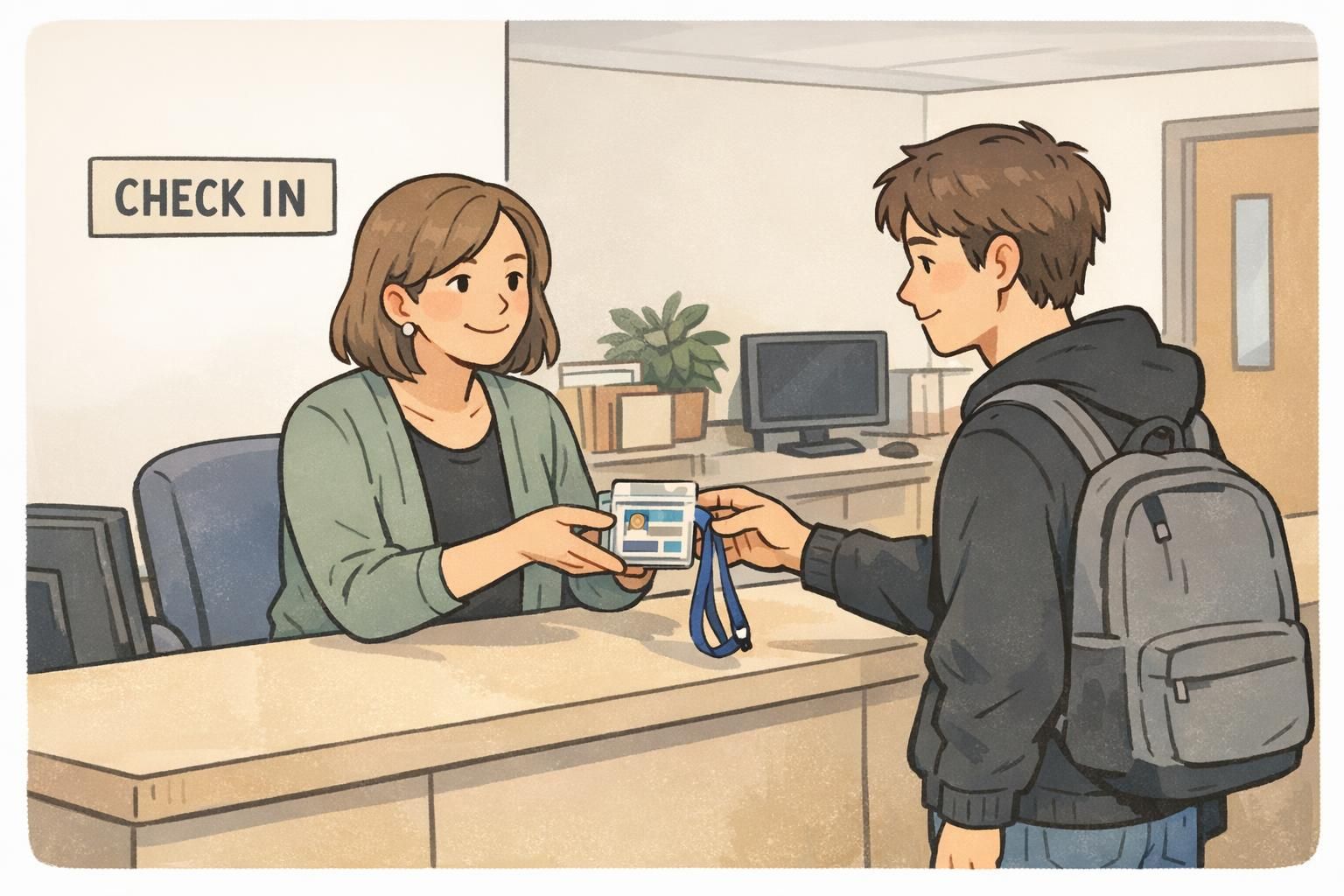
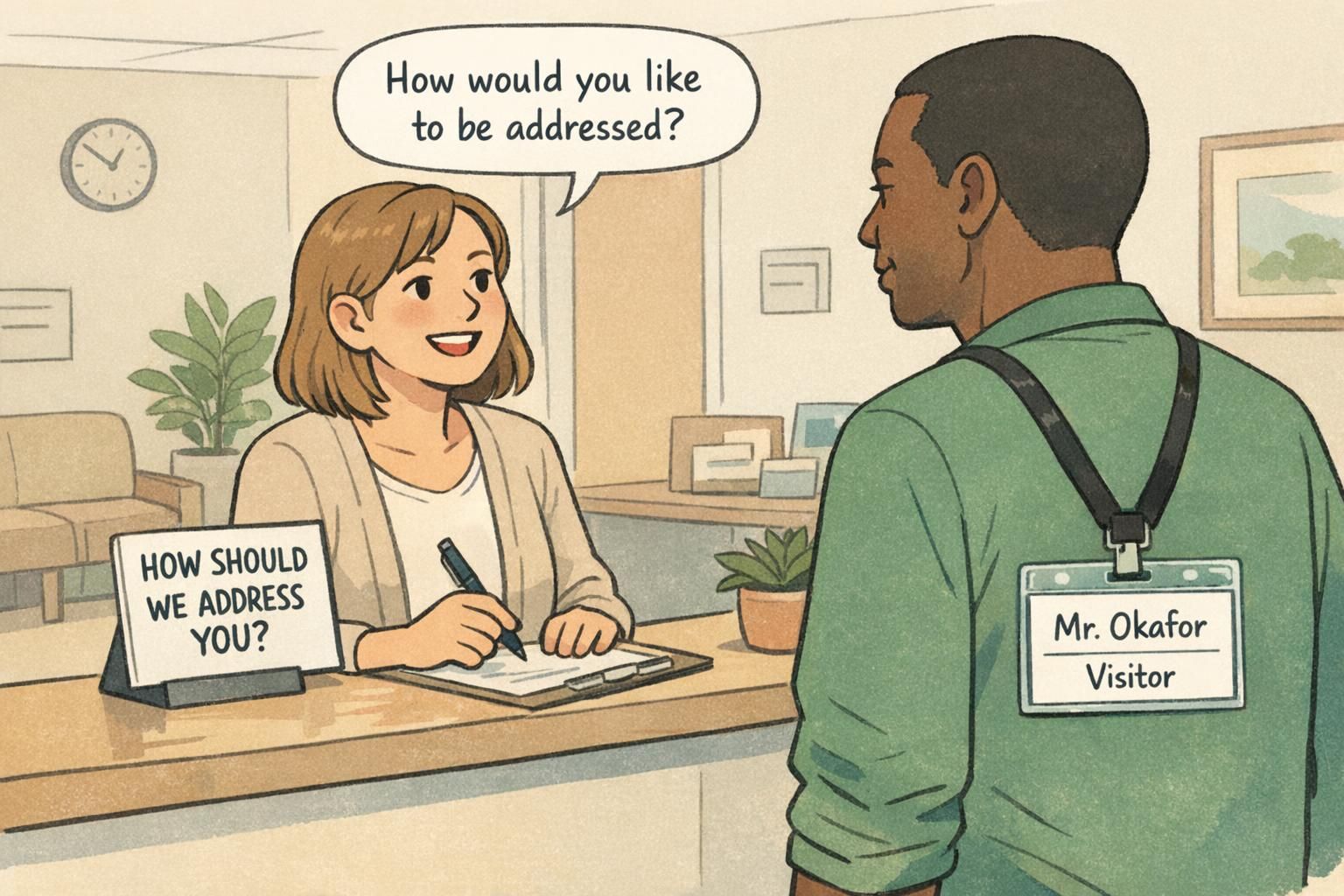
- Suggested check-in script: “How would you like your name shown on your badge?”
- Suggested introduction script: “Hello, Ms. Patel—do you prefer Ms. Patel, Dr. Patel, or Priya?”
- If you can’t ask in real time, choose a conservative layout that can be reprinted quickly if needed.
"Starting formal prevents accidental disrespect. Once someone tells you what they prefer, using that preference is the real mark of professionalism." – Event Operations Lead
Titles on badges: when honorifics help (and when to keep them optional)
Titles on badges can do two important jobs: they communicate respect and they clarify roles. In healthcare, academia, government, and other formal or client-facing services, an honorific can help visitors understand how to address someone and what authority or responsibility they carry.
At the same time, titles are personal and contextual. Not everyone uses an honorific, and assumptions can backfire—especially when people infer titles from appearance, age, gender presentation, or job function. That’s why the most respectful approach is to make titles optional and self-selected rather than assigned.
Good policy: titles on badges should be chosen by the wearer (or explicitly confirmed), not inferred by staff.
- Use a controlled list to simplify printing: Dr., Prof., Mr., Ms., Mx., None
- Treat “No title” as an equally respected choice (not a missing field)
- Avoid forcing honorifics in informal settings where they may feel stiff or unnecessary
- If credentials are needed, keep them separate from honorifics (e.g., role/credential on a smaller line)
Last names, family names, and the meaning of formality
Across cultures, family names can carry deep meaning—connecting to lineage, heritage, and social respect. In many communities, using a family name in professional settings isn’t cold; it’s courteous. In other environments, last names can feel distant, as if the organization is trying to be overly corporate or impersonal.
Because badge formats are highly visible, last-name choices can influence the tone of the entire space. A first-name-only badge can communicate approachability, but it can also remove a respectful boundary that some people expect at first meeting—especially with customers, patients, or senior leaders. Conversely, requiring last names in casual communities can discourage connection or make people feel overexposed.
- Formal default: Title + Last Name (e.g., “Dr. Chen”)
- Neutral professional: First + Last (e.g., “Aisha Rahman”)
- Casual/relationship-driven: First Only (e.g., “Aisha”)
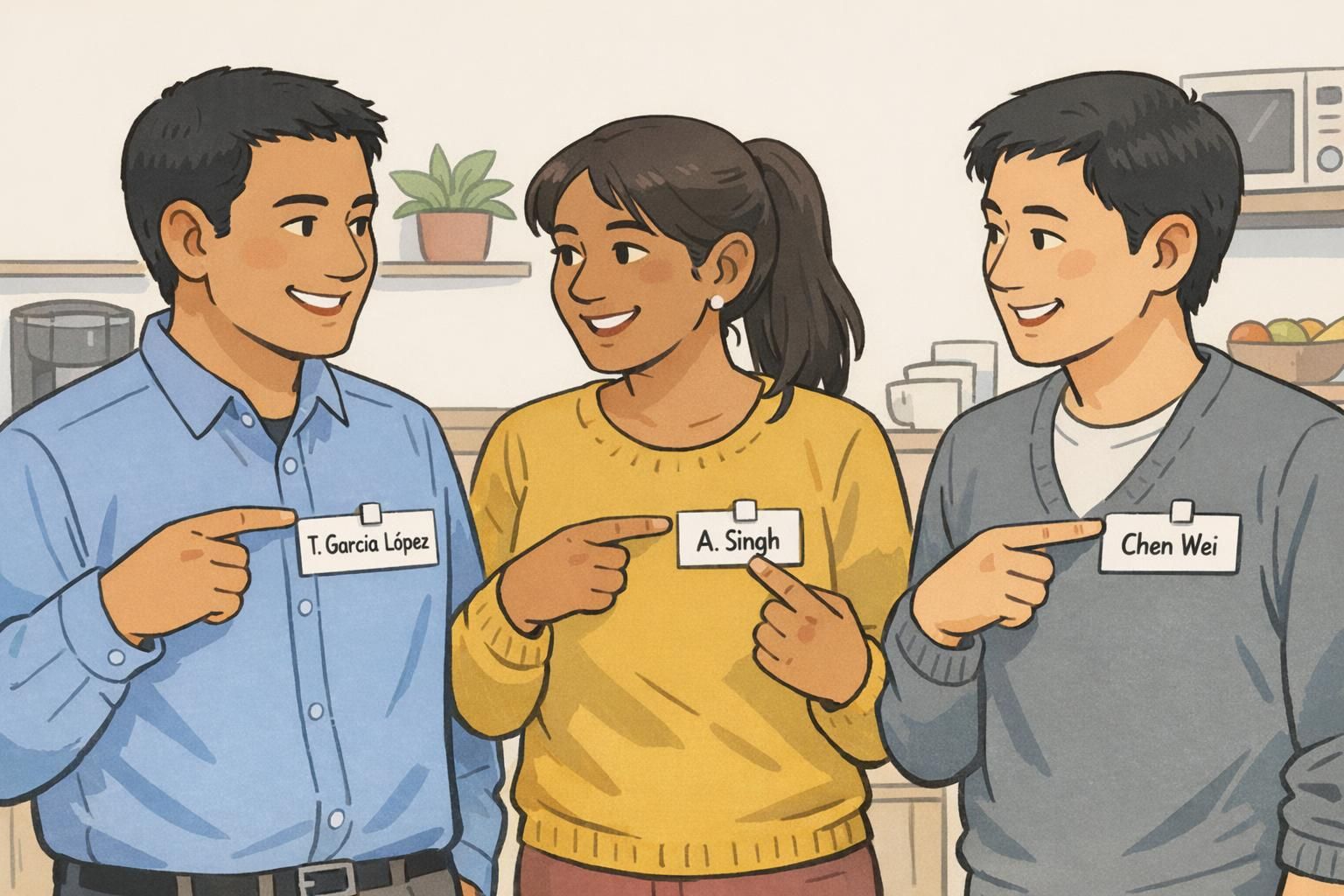
- Space-saving option: Initial + Last (e.g., “T. García López”)
The most reliable solution isn’t guessing the “right” level of formality—it’s designing badges that let the context and the wearer decide.
Avoiding unintended bias: what a badge can accidentally signal
Badges help people address each other correctly—but they can also carry unintended social signals. Names are often read (accurately or not) as clues about ethnicity, nationality, religion, gender, or social class. People may also misread naming conventions they’re unfamiliar with, such as multi-part family names, surname-first order, or the use of diacritics.
To support cultural sensitivity, prioritize self-identification and accuracy. Let people show the name they want colleagues and visitors to use, and preserve spelling the way the person provided it whenever possible—including capitalization and diacritics. Small choices reduce repeated micro-friction, like having to correct pronunciation or explain “which part is the last name” dozens of times.
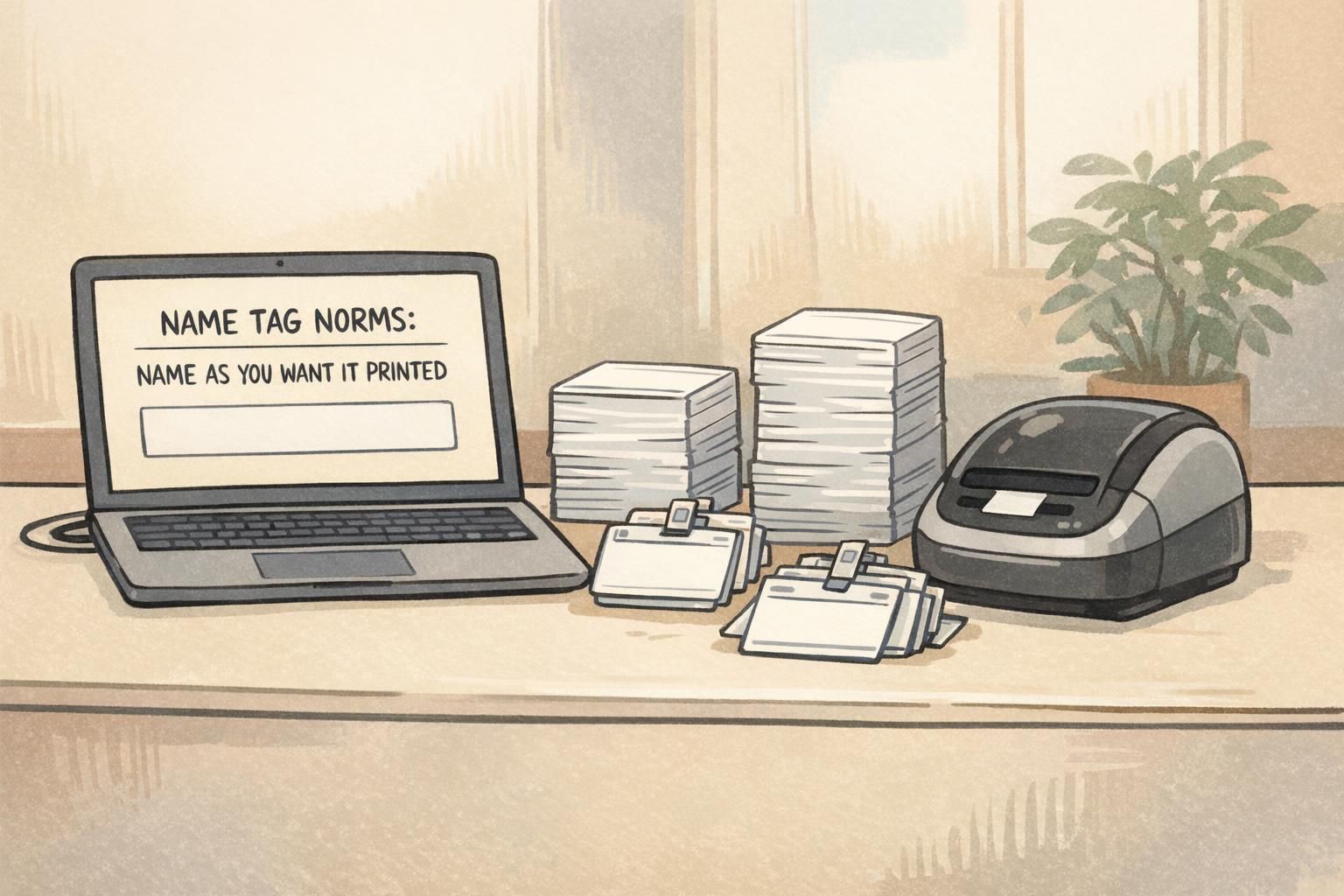
- Use a “Name as you want it printed” field (free text) as the primary input
- Support diacritics and special characters when possible to keep names accurate
- Avoid adding optional fields that pressure disclosure (only include pronouns, department, or credentials when there’s a clear purpose)
- Train staff not to “fix” name order, spacing, or accents without permission
A flexible template organizations can adapt (workplace, clinic, campus, conference)
A flexible badge template helps teams navigate different name tag norms without turning every check-in into a special case. The goal is to keep the badge readable at a distance while allowing the wearer to choose the level of formality that feels right.
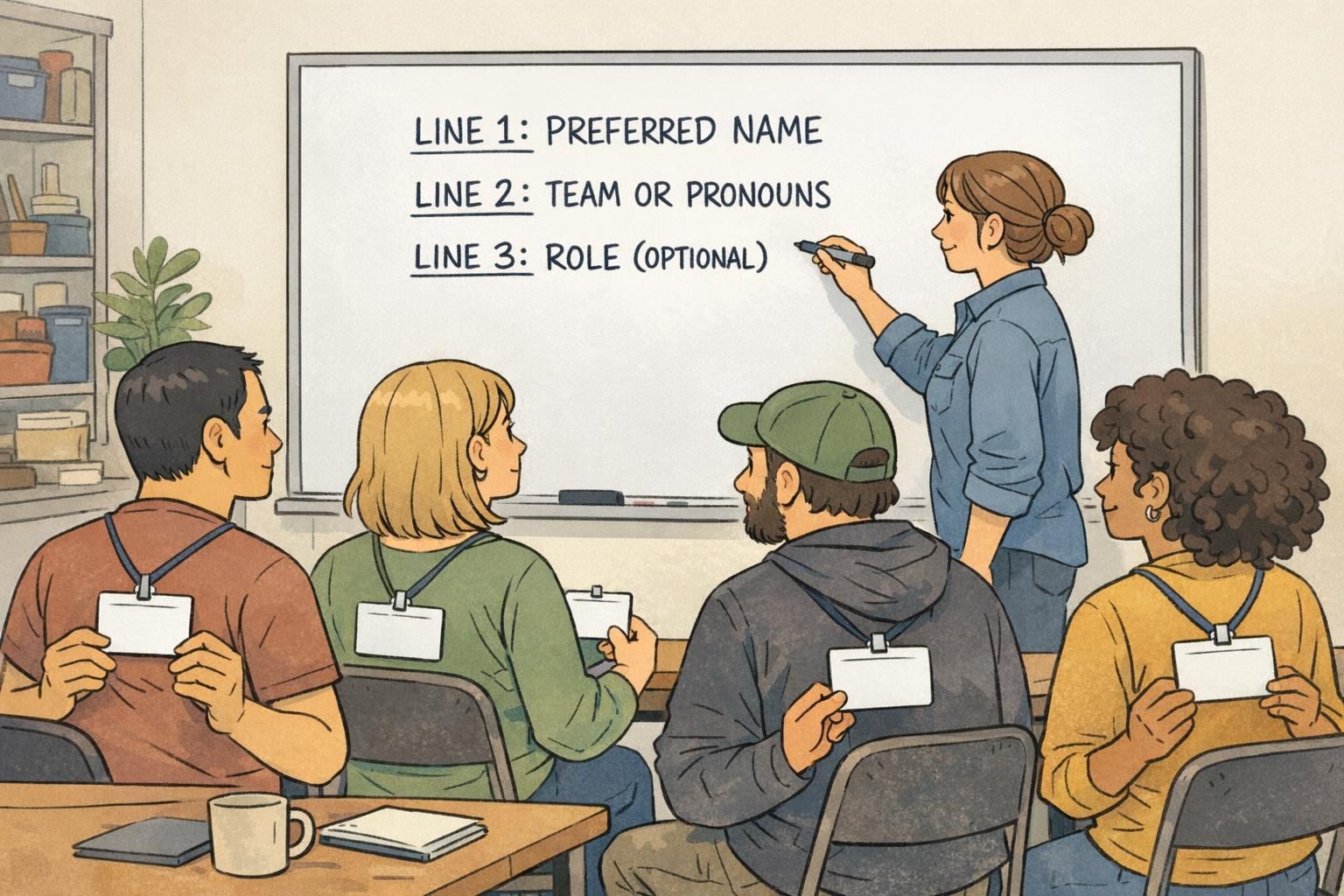
A simple modular approach works across workplaces, clinics, campuses, and conferences because it separates identity (the name people should use) from helpful context (team, pronouns, role, or credential).
- Line 1 (largest): Preferred Display Name (examples: “Dr. Chen,” “Aisha Rahman,” “Aisha”)
- Line 2 (smaller, optional): Pronouns or department/team (examples: “Operations,” “IT,” or pronouns if the wearer chooses)
- Line 3 (optional): Role or credential when relevant (examples: “Visitor,” “RN,” “Speaker”)
This template supports cultural sensitivity by letting individuals choose formality level while keeping the badge easy to scan in a hallway or at a registration desk.
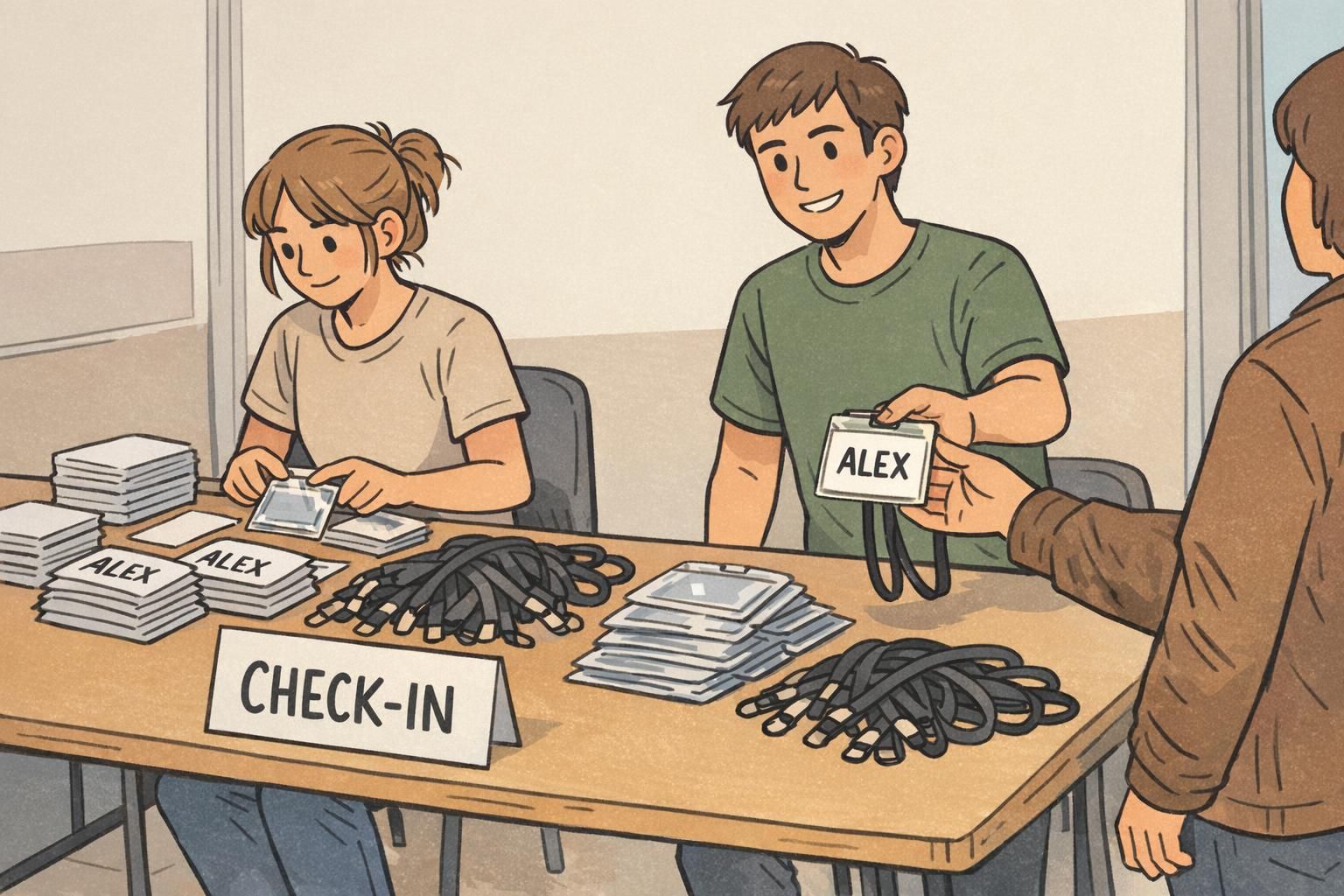
For short-term gatherings where attendees may have varied preferences, you can use event badges that support multiple name formats without forcing one standard. If you’re building or updating your event layout, BadgeZoo offers custom event badges with flexible name formatting so the primary name line can be formatted to match the wearer’s preference.
Operational tips: registration forms, printing rules, and escalation paths
Most problems with name tag norms aren’t design problems—they’re workflow problems. If preferences aren’t captured clearly, staff will guess. If reprints are hard, people will tolerate mistakes. And if rules are unclear, names may get “standardized” in ways the wearer never agreed to.
- Add a required field: “Name as you want it printed” (free text)
- Add optional dropdowns: Title (including “None”) and Pronouns (including “Prefer not to say” if used)
- Set printing guardrails: don’t change spelling, order, capitalization, or diacritics without permission
- Create a fast reprint path: a simple, no-questions reprint policy for typos or preference changes
- Assign an escalation contact: one person per event/shift who can approve exceptions (long names, special characters, unusual layouts)
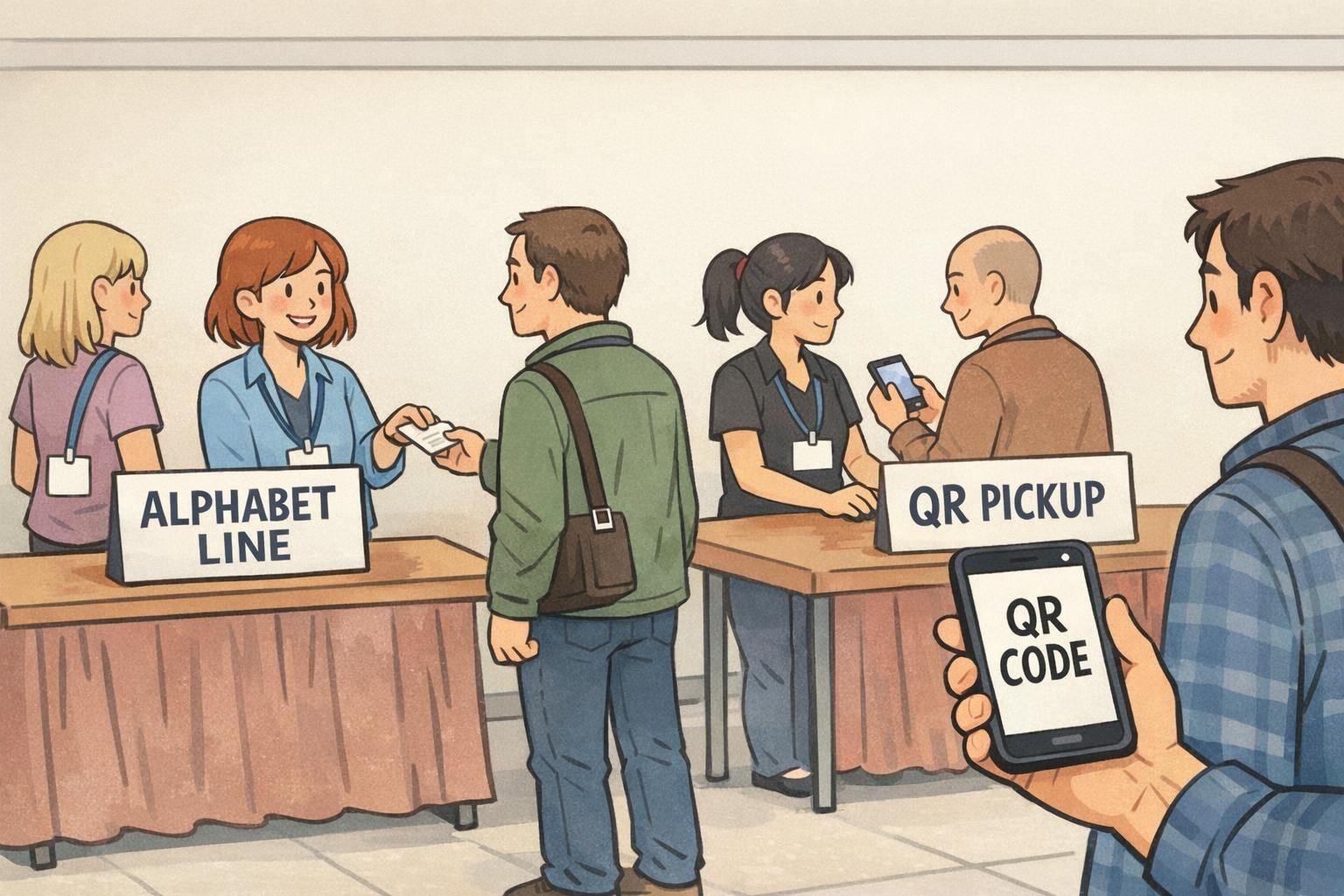
In higher-security environments, a dual approach can help: a front-facing preferred name for respectful interaction plus an internal identifier for verification. That may mean a back-side printed ID, a scannable code, or an encoded card—without forcing the person’s legal name to be the primary social label.
Only if your setting truly needs it (for example, certain formal or security-driven contexts). In mixed or public-facing environments, offering First + Last, Title + Last, or First Only as wearer-selected options often creates better comfort and fewer corrections.
Plan for it: allow smaller secondary lines, consider initial + last name as an option, and avoid shrinking the primary name line to the point it becomes hard to read. When in doubt, prioritize readability of the preferred display name.
Treat the wearer as the authority on their name. If you need to confirm for safety or records, do it separately from the badge display name rather than “correcting” the badge text.
Choosing the right format and material for respectful, readable identification
Even the best naming policy can fall apart if the badge is hard to read. Respectful address depends on legibility: clear typography, strong contrast, and a layout that doesn’t force long names into tiny text. When people can read the badge quickly, they’re less likely to guess at titles, shorten names incorrectly, or avoid using someone’s name altogether.
Match the badge format to the duration and needs of the setting. For short-term gatherings, event badges in holders or on lanyards are practical because they’re easy to print and reprint. For ongoing roles, durable name tags or photo ID cards help maintain consistent standards while still honoring personal preference fields (like title choice or preferred display name).
- Use a large primary name line (the name you want people to say out loud)
- Choose high-contrast text (dark on light is often easiest at a distance)
- Avoid cramming: let longer names wrap or use a considered abbreviation option
- Keep optional info truly optional (pronouns, department/team, role/credential)
- Ensure badges are worn consistently (clip placement, lanyard length, and visibility affect readability)
The most respectful badge is the one that helps others address the wearer correctly—quickly, confidently, and according to the wearer’s preference.